Thursday, July 6, 2017

OpenSpirit. Sell!

As I mentioned below, OpenSpirit was a sort of a venture funded company.

One of the venture companies who invested in us was Kenda Capital, who took over the Shell Technology Ventures funds, and then added additional capital from Coller Capital and the Abu Dhabi Investment authority. These two funds make up just under 50% of the ownership of the fund.

OpenSpirit, while not the largest of the Kenda portfolio companies has the distinction of being one of their more profitable ones. So Kenda decided it was time to "set us free" and gave a very strong directive, via their Class Two director, to put the Company on the market.

I worked with the Chairman of our Board to review and evaluate various investment bankers to help us with this task. We talked to some local Houston i-bankers, and also several based in California. We finally decided that the Company would be better represented by an investment banker without ties to the oil industry - as we felt that our value would be optimized by a horizontal player, not an oil field service company.

We decided to use Holihan Lokey, and never looked back.

We pitched over 20 companies with the deck. I traveled to San Francisco several times to find the best place for the Company to land.

We found that TIBCO was most interested, and they showed their interest very early. We got an LOI (that is, letter of intent) in November of 2009, and started negotiating immediately.

The Company's investors were not too thrilled with the offer. Well, let me put it this way. Not all the investors were happy with the offer. There was a certain amount of politics being played regarding our technology, and who would be the best steward thereof. But we all were finally in agreement that TIBCO would be an excellent acquiring company.

That conclusion was reached in February of 2010.

From February to the end of September, we did nothing but negotiate the terms and conditions of the deal. Very few of the contentious issues surrounded the price of the Company. They all revolved around indemnifications and representations and warranties. Again, discretion does not allow me to go into great detail regarding these issues, but let me say that the legal fees around this deal became a major cost to all sides concerned.

But we did manage to get the deal done and closed - right around September 21nd.

Then I started working for TIBCO as their VP of OpenSpirit.

Object Reservoir. Two sales in one

I stayed with TIBCO for a respectable amount of time so that the technology could be transitioned to the new organization. I have not worked for a big organization for quite some time, so I figured it would be best to move to another small company.

The company was Object Reservoir, a software company that used Finite Element Analysis [FEA] to perform oil and gas reservoir simulation. (Most software used Finite Difference Analysis, as it is "cheaper" from a processing standpoint) It was founded by an old friend of mine several years ago and had sort of a tough time throughout the years.

My task was to see if we could pull the company out of a skid, or lacking that, get what we could get for the technology.

The technology was really quite spectacular. I would like to say that we moved on from the FEA an analytic solution to what was essentially a Big Data problem. The company had come up with a science based analytic and heuristic solution to the question everyone was asking at the time - how do you best produce unconventional gas wells?

We were Big Data before Big Data was cool.

But then gas prices collapsed, and we collapsed with it.

The company had built up a very nice consulting business based on our technology. And besides that, we were able to convince several oil companies to share their gas production data (very proprietary) so that we could perform these analytics across reservoirs so that we would not be influences by local anomalies .

These engineers were good at what they did, but more importantly, they were reservoir and petroleum engineers. We were able to get a small bidding war for that part of the company - and we ended up selling them (as a unit) to Weatherford.

That gave us some time to focus more on the software side of the business.

One problem we faced, however, is that we still hadn't solved the problem of either wet gas or oil. The physics are hard, and though in conventional reservoirs solutions have been found, there has simply not been enough data (big or otherwise) to determine the accuracy of the algorithms.

But we dedicated our scarce resources on solving these problems - but it all sort of caved in at the end.

So we started another "process" to get the software a good home.

It was a short sales cycle, and we were able to work with Halliburton to put the software, and the people, at the Landmark Graphics division of that company.

That was two years that was a lot of work, but ultimately a disappointing end. 

TerraSpark - great technology looking for a home

I had a nice short respite after Object Reservoir - I called it a sabbatical, and then started the game again with a company named TerraSpark.

This was a phenomenal technology that came from years of research that started with ARCO back in the 1980s.

The company itself was a spin-off of the University of Colorado, which is where the technology ended up for what you might call an incubation phase. 

There were essentially three bits of technology that could be mixed and matched in order to get a much better idea of what was going on underground in almost any circumstance. Well, as long as you had seismic data.

The first let you automatically pick faults (fractures with displacement) in your data. You need to think about it for a second, but this is harder than it sounds. Faults are really the absence of something rather than the presence of something. When a geophysicist is trying to pick "horizons" or a given formation that may represent oil bearing rock, you generally see a well defined reflection in the seismic data. (Think of seismic data as a sonogram. The horizons are equivalent to the baby's head or bones, or whatever you see in there). Faults exist where the horizons are broken. It is hard to come up with computer rules that let you automatically decide where these breaks take place.


The second lets you "wrap" a geobody (think of a big intrusion of salt) from the outside (shrink wrapping) or the inside (like blowing up a balloon). Again, the hard part is building the computer rules to make this happen quickly.


The last, and most amazing technology lets you move the seismic data back in geological time, to let you see what the seismic would have looked like when the formations were being laid down as beaches, river beds, or deltas. This originally would take days (thing of taking a bunch of pieces of paper, rumple and tear them, deform and invert them, and then algorithmically restore them to flat pieces of paper. Wow!)


As with most new technology, a big part of the problem we faced was convincing our clients that this was something they NEEDED, not something they WANTED. Since they were already finding oil, this was a tough call. 

Another big problem was the performance. 

Computers needed to catch up with the software. It did, but by the time it did there was not much "runway" (some call it cash) left to spend on sales and support.

My role in the company was two-fold - see what we needed to do to increase penetration of sales, and to find a home for the company. I have three transactions in two years, and now I needed to capitalize on that experience.

We had to reorganize the company just a bit so that we could last longer with the cash we had. We also moved the financial part of the company down to Houston so that I would have better and faster access to that information.

And then we started a "process" to get the company some attention.

We hired an investment banker to help with the process, and then contacted all the likely acquiring companies to spark some interest. That was started in the summer of 2013, and by the fall of 2013 we had three "Indications of Interest" that we could work with.

It was an interesting process, but in the end we had CGG Jason as the obvious best fit for our technology.

CGG was to take almost all of the employees (15 of 19), the assets, the leases, and the furniture.

Those negotiations took another couple of months, but by January we were ready to close.

On January 15, 2014, we had our closing conference call. This makes 4 transactions in 40 months for me.

My employment was terminated on 2014.01.31

Passing Time

Since leaving TerraSpark my life has been truly great.

Doreen and I have been able to travel some:

Merida

London


Amsterdam


San Francisco


New York City (and Storm King)


Brooklyn


Alaska! (we have many photos of Alaska. That was a great visit with the Roe family)


Seattle


Sicily


Rome


Dallas


Lyon


Paris


Milan


Lake Iseo and Bergamo (for the Christo Floating Piers)


Verona


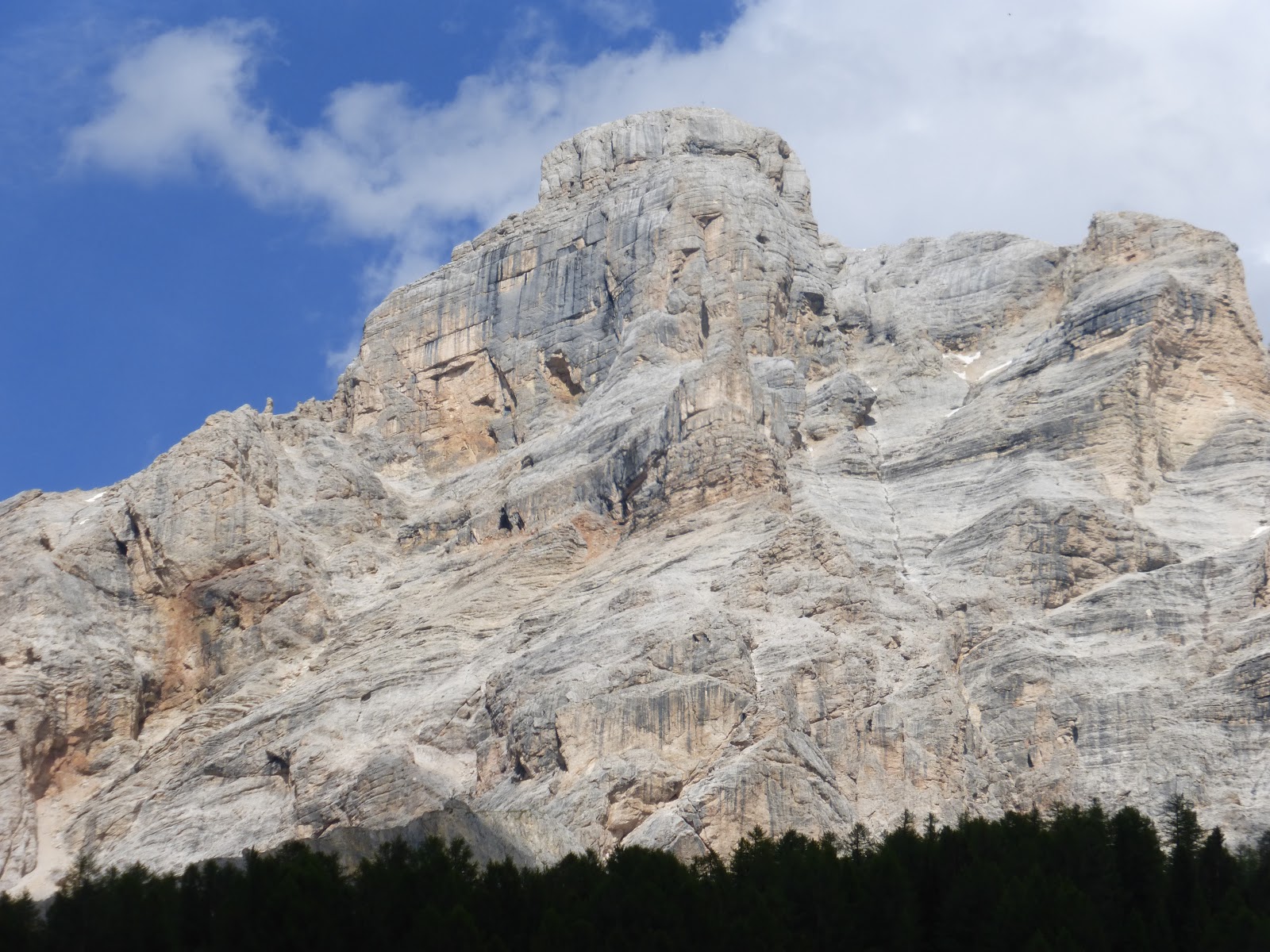
The Dolomites


Venice


The Hood Canal


Oaxaca


 Paris


Djimmah, Little Guy, Lulu, and, of course, Blaze

We have had Djimmah since about 2000:


Little Guy from about the same time:


And, of course, we got Lulu:


Certainly the best dog in the world.

Well, after Blaze, of course. Bless her soul.


60 years old.

I have won the world's best lottery.

I was born in the middle of the 20th century

In the United States

In the middle of the United States

White

Male

To a family that valued education. 

And I have been lucky enough to have made some money, married the love of my life, have the best siblings in the world, made some great friends, never had to fear for my life, worried about dangerous water, or felt I could not go somewhere because of the color of my skin.

This is how this happens. Not through bootstraps. Through hands up. I need to thank some people.

The first hand up was from the Founding Fathers. They recognize the need to create a society that offered opportunity to the second sons of the world. The appreciation that self interest, properly managed, can be a very valuable asset. They created a living Constitution that has served the US well for over 200 years. I could not have succeeded the way I have without this.

I also need to thank Abraham Lincoln. For keeping the country together during a terrible time. To know that sacrifice is worth it. And for keeping The South, and particularly Louisiana in the Union. For reasons that will become clear later.

The depression in Europe in the 19th century also gave me a hand. That, combined with the enlightened view of immigration in the US at the same time. My father’s grandparents all escaped poverty in Belgium by coming to Wisconsin to start a new life. That new life allowed me a chance to get into that 1%

There is a huge debt I owe to my father. For the usual things, of course, love, shelter, caring, but more for the fact that he decided to graduate from High School (the first in his family), and then college. And the joining the Army in 1941, just prior to Pearl Harbor. He would never have met my mother had that not been the case.

And my mother. A child of the plantation south, her family has had their share of hardships, including bankruptcy. But she had the intellectual curiosity to attend college in Lafayette in the 1930s. And her father let her. Then she had the sense of adventure to correspond with a young man fighting in Europe, finally marrying him when he returned. And the strength to stand up to her family when he moved her from south Louisiana to central Wisconsin. That set up a level of success I could not have achieved elsewhere.

I also owe thanks to Kimberly Clark, their shareholders and management. For hiring a young chemist, keeping him employed for 35 years and affording HIM the chance to raise a family, retire with a nice pension and provide an education for his seven kids.

When it gets to more concrete gifts I have been provided, I must thank the taxpayers of Appleton, WI for uncomplainingly funding an excellent school system that give the kids in town the ability to learn whatever they wanted.

And for my math teacher in 7th grade who pulled me out of the “slow” class and started me on the “gifted” path. And to tracked learning. I benefited. It worked for me.

To the Appleton Post Crescent. For employing “paper-boys” who, at the age of 13, could make enough money to understand the value of work. (Hard work? Not so much. But you had to show up on time, rain, snow, or shine, and deliver the papers)

I owe my ability for critical thinking to a number of high school teachers, but probably mostly my debate coach, who was able to get our small team to be a major competitor in the state at the time.

The Wisconsin taxpayers gave me a hand by having supported The Wisconsin Way at the University of Wisconsin, where I was able to afford a great education. Because it was the right thing to do for the people of the state.

There are many people inside of many companies who took a chance on me, and from whom I learned how to do what I do. From the father of a friend who got me a job in Peru while I was still in college, to my first, great job at Exxon Minerals with several great bosses, to the horrible job I had an Exxon Synthetics, with the worst boss I ever had. He helped me get to where I am by showing that a petty, condescending, arbitrary, and conniving management style doesn’t bring out the best in people.

The many small companies I worked for all showed me how one can trade off current opportunity for future gain. The risk sometimes pays off and sometimes it puts you in the bottom 10%.

I never set out to become rich. But I am not naïve enough to think that I got here on my own. The path to success is paved with many, many people who give you a leg up. It is crazy to think otherwise.

It has been a good 60 years. I hope during the remaining years I continue to be cogent, affable, and happy. That is all anyone can hope for. 

Wednesday, June 7, 2017

I am now one month away from my 60th birthday. As you can probably tell, this journey has not been documented as has my entry into my 50th decade.

Some people will look at this and ask “Why?”

Other people will look at this and ask “Why not?”

Most people will look at this and yawn.

This thought made me go back and look at my first Blogger post: May 27th, 2004.

Here it is in its entirety:

Some will like this, some will not. Most will not care one way or the other. 

And I think I was right.

Few of us command such a presence that we have an influence on many people. Few of us play on a stage bigger than our immediate friends and family.

This is not always a bad thing. As my father (bless his soul) always said, “What do you have if you don’t have your family?”

On the other hand, we all want to be part of our larger community. We (well, most of you who may be reading this for some reason) vote, and take that obligation seriously.

Most of us want to live in a neighborhood where we know our neighbors, and feel safe walking the streets at night.

Most of us want our city to be responsive to our needs as citizens, delivering clean water, good streets, effective enforcement of ordinances.

Most of us want a say in how development happens near our homes.

Some want to be in the middle of a big metropolis, some what to be in the middle of a quiet wooded lot.

Others want a beachfront condo, and some just want a tent in the woods.

We all want meaningful work that delivers a service to clients and provides a good living.

We all want a loving family to return to at night.

Few of these are influenced by what happens in Washington DC. As Tip O’Neill said in 1935, “All politics is local”. Who your mayor is affects your daily life more than who the President is.

So work on that.

Work with your city to get laws passed that you want passed. Politics is created by those who show up (thanks to my lovely bride for that). If you choose to stay home, don’t be surprised if your wishes are ignored.

If you are willing to work for that new stop sign, street resurfacing, or deed restriction variance, you can make a difference. Go and work on it.

And while everyone has the right to complain, whether or not you vote, it is a lot more important to get involved with your City Councilman to try and make change.

Go to all the public meetings your city holds. (In Houston we have Capital Improvement Project meetings, where the city solicits input from citizens about how to spend capital. I have seen changes happen because of comments and recommendations submitted at these meetings. If Houston does, this, I am sure that where ever you live does it, too) Make your voice heard.

Sure, go to rallies, write letters to the editor, comment of stranger’s Facebook posts. There is a visceral satisfaction in shouting out to the wilderness.


But please show up. Just show up.